Look Closer
Visual Pathophysiology for Adult Nursing & Allied Health Students
Every symptom has a story. Let's look closer.
Every Symptom Has a Story. Let's Look Closer.
1. Understanding Before Memorization
Memorization has its place, but understanding comes first.
When you understand why something happens, you no longer have to memorize every detail independently. The facts begin to connect naturally because they become part of a meaningful story.
Instead of asking, "What do I need to memorize?" you'll begin asking, "Why did this happen?"
2. Learn Visually
The human brain remembers pictures, patterns, and stories remarkably well.
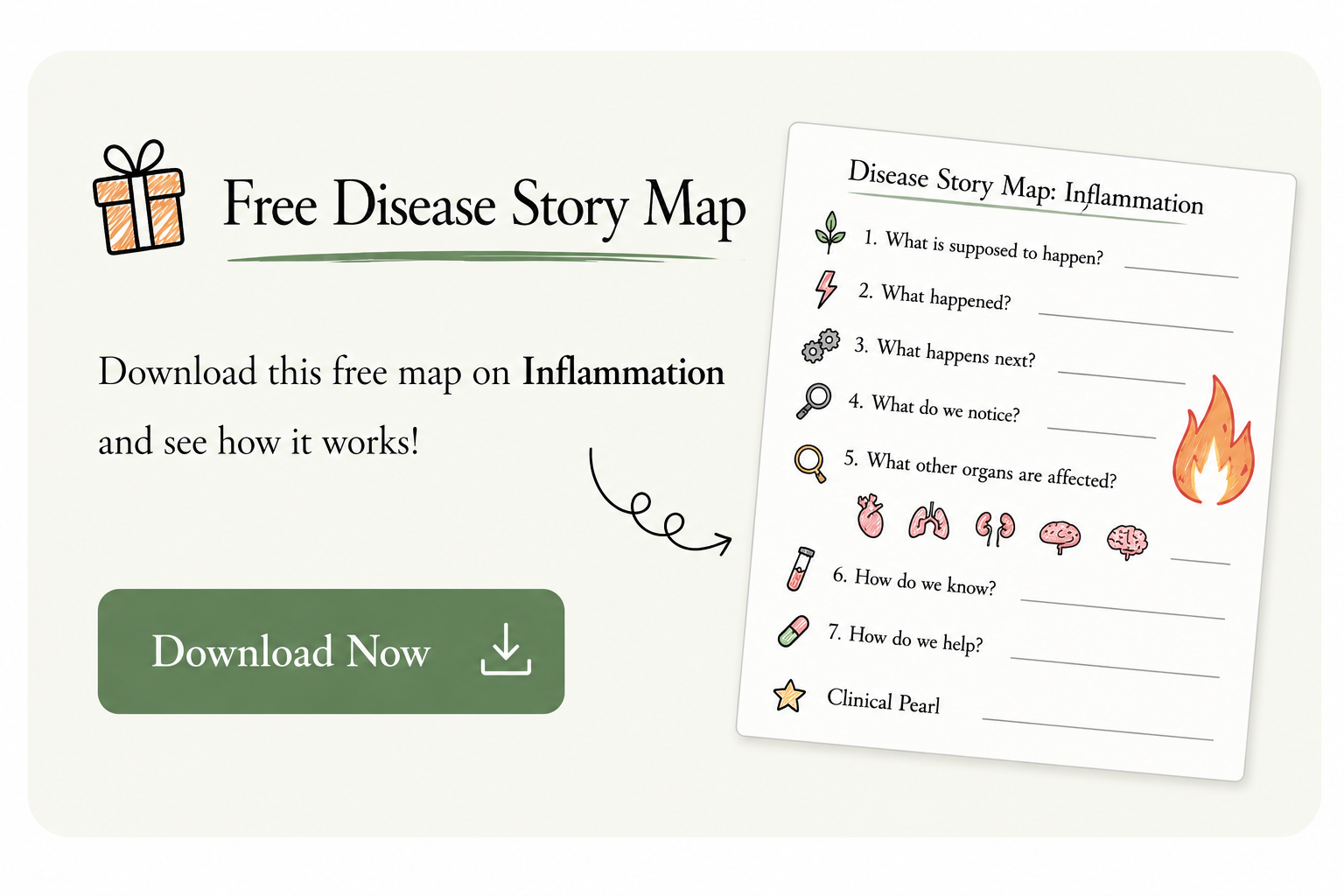
That's why I use simple Disease Story Maps—hand-drawn diagrams that organize complex disease processes into one visual framework.
Rather than pages of disconnected notes, you'll learn to see how each piece fits together.
3. Draw It Yourself
4. Don't Start With the Symptoms
5. Discover the Story Behind the Symptoms
6. See the Ripple Effect
Watching someone else's diagram is helpful.
Drawing your own is even more powerful.
Each Disease Story Map includes a completed example followed by a blank template for you to recreate in your own words and drawings.
The goal isn't artistic perfection.
The goal is active learning.
When you draw, organize, and explain concepts yourself, you're building stronger understanding and longer-lasting memory.
At Look Closer, I believe that students don't struggle because they're incapable—they struggle because medicine is often taught as isolated facts to memorize rather than connected stories to understand.
My goal is to help you move beyond memorization and develop the kind of clinical thinking used by healthcare professionals.
Many students begin with the patient's symptoms.
I begin earlier.
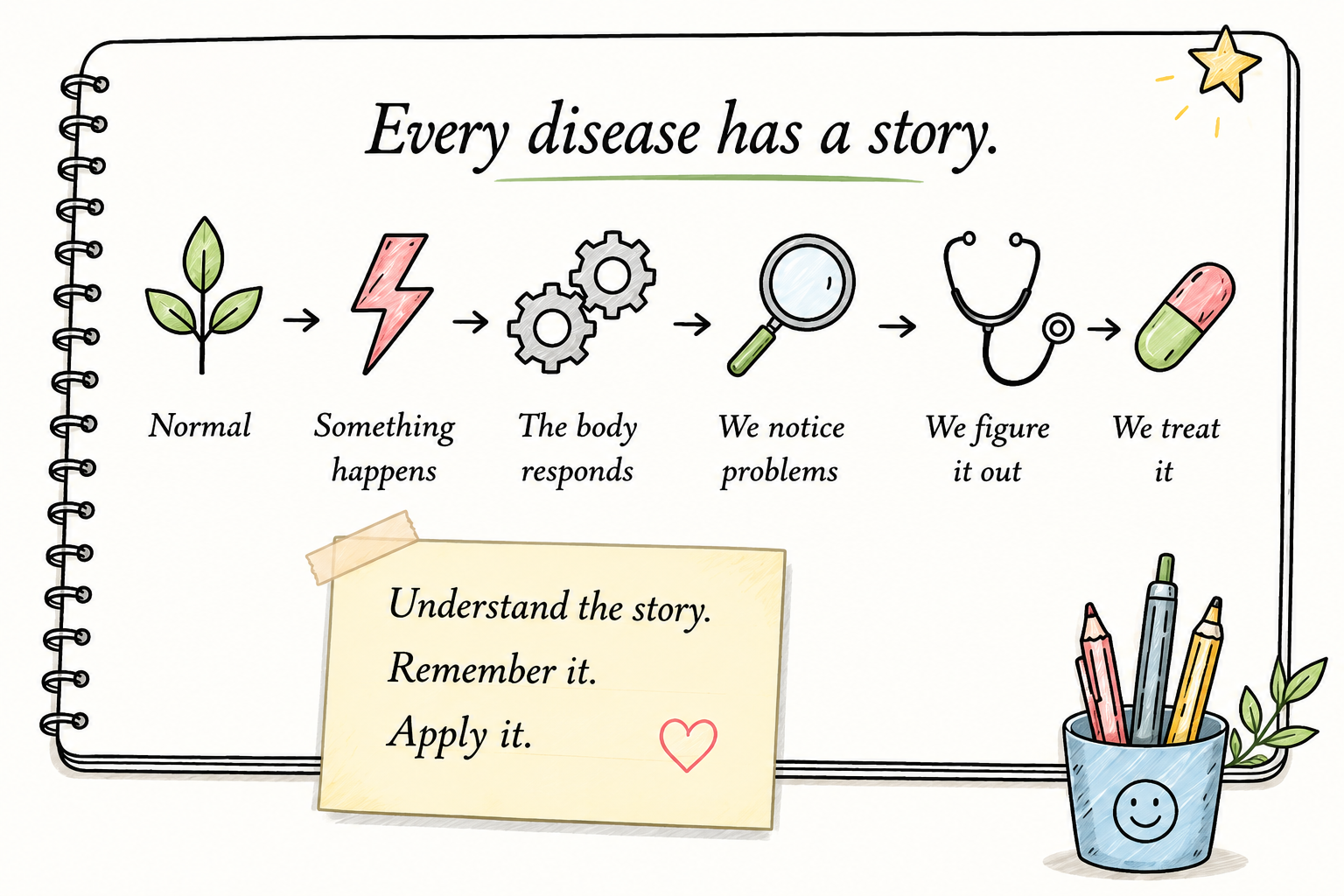
Every disease starts with a healthy body.
Then something happens.
The body responds.
Only then do symptoms appear.
By understanding what happens beneath the surface, the patient's signs and symptoms become logical rather than something to memorize.
A fever...
Swollen legs...
Shortness of breath...
Chest pain...
These aren't the disease.
They're the body's way of telling its story.
Disease Story Maps help you uncover the unseen biological changes that explain what you're seeing in your patient.
Every symptom has a story. Let's look closer.
The human body doesn't work in isolated systems.
The heart affects the kidneys.
The kidneys affect the blood.
The blood affects the brain.
The lungs affect the heart.
Every disease creates a Ripple Effect throughout the body.
One of the goals of Disease Story Maps is to help you recognize these connections so you begin thinking like a clinician—not in isolated chapters, but in interconnected systems.
When you understand the ripple effect, you stop seeing "heart disease" or "kidney disease."
You begin seeing the patient as a whole person.
My Mission
My mission is simple:
To help adult nursing and allied health students stop memorizing diseases and start understanding them.
Because when you understand the story behind a disease, you'll remember it longer, apply it more confidently, and care for your patients more thoughtfully.
Every Disease Story Map answers seven simple questions (the framework):
What is supposed to happen? (healthy condition)
What happened? (trigger or etiology of diseased condition)
What happens next? (pathophysiological changes)
What do we notice? (signs & symptoms)
What is the ripple effect? (other organs affected / pulled into the story)
How do we know? (Diagnosis)
How do we help? (Treatment)